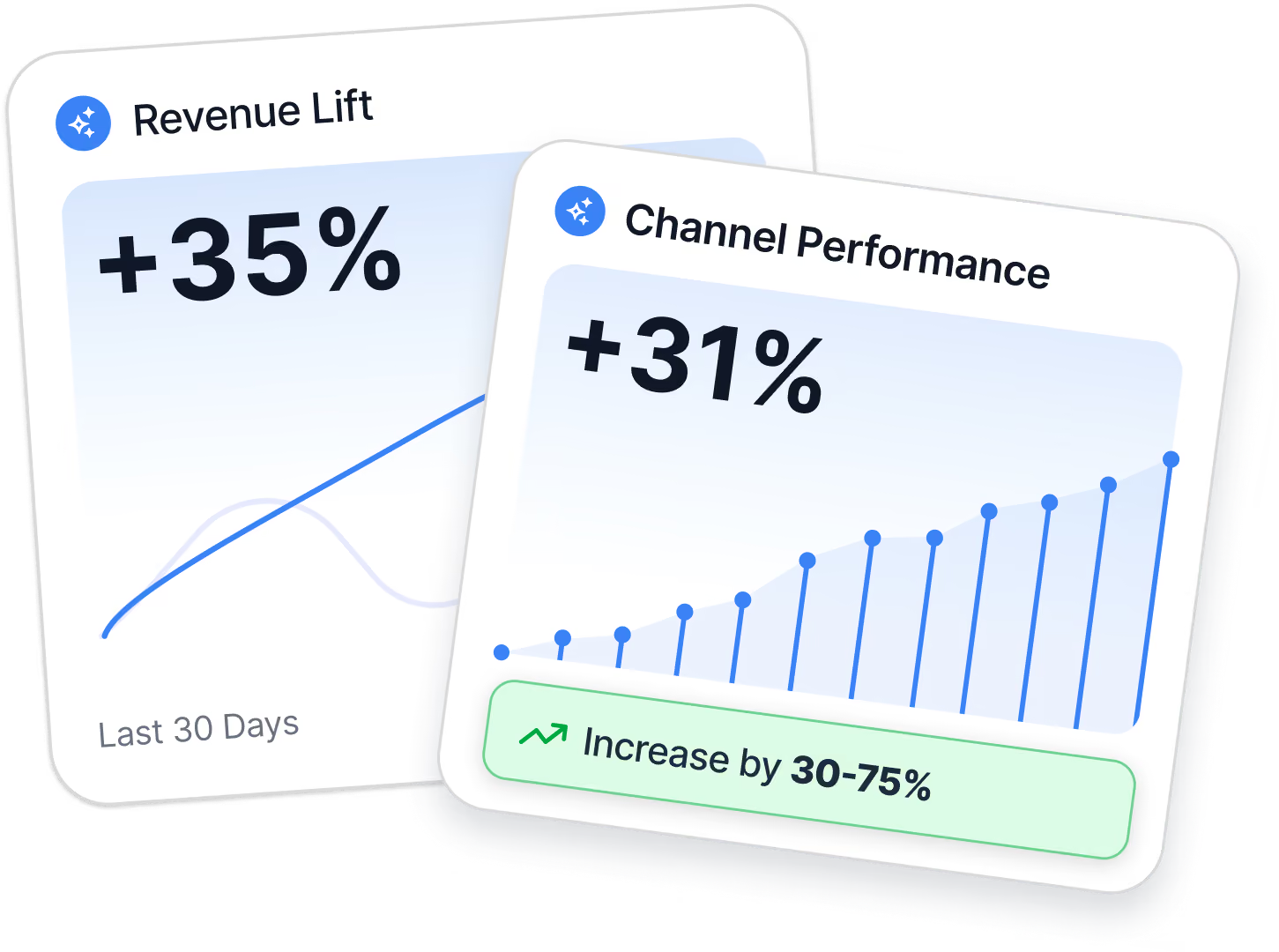
How AI in eCommerce Marketing Is Flipping the Script
Summary

Key Takeaways


Quick Wins You Can Launch in 30 Days
- Recover Revenue Automatically: Abandoned cart and browse flows with better subject lines, smart send times, and product blocks that fit each shopper.
- Recommendation Modules: Add “related” and “you may like” blocks to email and onsite to lift AOV without heavy design work.
- Triggered SMS: Restock, price drop, and replenishment nudges that respect frequency caps and consent.
- Coordinated Launches: Align email, onsite hero, and organic social so the same story lands everywhere on release day.
Where AI in eCommerce Marketing Drives the Most Value
Let’s take a closer look into the role of AI in eCommerce marketing and find out where it digs out the most value.
Hyper-Personalization that Converts
Most tools send one message to everyone. That leaves money on the table. Use Personalized marketing AI to create micro-cohorts by behavior, value, and affinity, then tailor modules, copy, and product picks. The result is less noise, more action, and a meaningful lift in conversion.
Automation Across the Lifecycle
Map journeys from first visit to repeat purchase with E-commerce automation. Welcome series, post-purchase education, replenishment, win-back, and VIP moments all benefit from AI that adapts timing and content as shoppers move.
Smarter Testing With Less Rework
Keep A/B tests always on. Promote champions, rotate in new challengers, and keep a small holdout group for true lift. AI can refresh hooks and layouts on a cadence you choose, so campaigns do not go stale.
Make Every Channel Work Together
- One customer profile, all touchpoints: Unify onsite behavior, email, and SMS so the next message reflects the last action. If a visitor browsed blue denim yesterday, the next email hero and onsite block should show blue denim first.
- Onsite plus messaging sync: Personalize onsite for anonymous visitors, then carry that context forward post opt-in. The journey feels continuous, which builds trust and reduces friction.
- Frequency, fatigue, and consent: Good marketing respects boundaries. Give people control of topics and frequency. Honor opt-outs across channels. AI helps watch engagement and slow cadence before fatigue becomes churn.
From Dashboards to Decisions
- Ask questions in plain English: Dashboards are useful, but they often stall at “what happened.” Modern AI-powered marketing tools let you ask, “Which segments drove revenue last week and what should I change?” and return both the chart and a clear plan.
- Metrics that matter: Focus on revenue, AOV, repeat rate, list growth, send-time lift, and cohort performance by product. Keep a weekly scorecard and act on it.
- Close the loop: Turn insights into action. Approve recommended changes to timing, subject lines, audiences, and offers so improvements ship fast.
Want to see coordinated personalization and automation working together? Explore AI and eCommerce marketing solutions to learn how teams align email, SMS, onsite, and reporting in one place.
An eCommerce Automation Implementation Roadmap
Let’s map out a quick implementation roadmap:
Step 1: Connect the Stack
Start with your commerce platform and consent tracking. Shopify or BigCommerce can be connected in minutes. Verify that product catalog, orders, and events (add-to-cart, checkout start, purchase) are flowing into your messaging tool and reporting. Map identities so anonymous behavior can link to a profile once someone opts in. Add domain authentication (SPF/DKIM/DMARC) for email and confirm SMS short code/brand registration if needed. Set up a basic preference center so new subscribers can pick topics and frequency from day one.
Step 2: Map 3–5 High-Impact Journeys
Pick proven winners: welcome, launch/new arrivals, replenishment, win-back, and VIP. Give each journey a single business goal (e.g., “first purchase within 7 days” or “25% increase in repeat order rate”). Define the primary segment and 1–2 variations (e.g., VIP vs. first-time visitors). Outline the content modules you’ll personalize—hero, recommendations, offer block—and the decision rules that move people between steps. Add a lightweight testing plan: one subject-line variant, one offer variant, and a send-time test per journey.
Step 3: Pilot, Measure, Scale
Establish a clean baseline for two weeks. Launch to a limited set of segments so you can see signals without risking the full list. Track a tight metric set: conversion rate, revenue per recipient, AOV, unsubscribe rate, and repeat purchase rate. After 10–14 days, promote champions, pause underperformers, and document learnings in a simple playbook. Expand the winners to more audiences, then layer in one new variable at a time (another segment or module) to keep lift compounding without adding chaos.
Pitfalls to Avoid
- One-size-fits-all messaging: Segment by value, intent, and recency so the creative speaks to each group.
- Channel silos: Treat email, SMS, and onsite as one system. Duplicate work and mixed messages cost you both time and trust.
- Over-sending: Add preference centers and frequency caps. Watch engagement and pull back before deliverability suffers.
- Data hoarding: Collect what you will use. Tie each field to a decision you plan to make.
Book a Demo With Cavaco
AI in eCommerce marketing works best when you keep the plan simple and let the machine scale the work. Start with a handful of journeys, automate the obvious, and measure weekly. Protect brand voice and privacy, use AI for creative variants and testing, and keep channels aligned so each message builds on the last. Over time, those small lifts compound into real revenue.
Curious how this could fit your stack and timelines? Book a quick demo with Cavaco. We’ll review your current journeys, show how coordinated personalization and E-commerce automation can reduce busywork, and outline a practical launch plan. You’ll leave with clear next steps and ideas you can deploy right away.
Have Questions?
Next/ Related Post

How Automated Content Creation Support Can Boost Your Business’s ROI
Integrate CAVACO.
Grow Your Revenue.
performance boost.